Every freight decision starts with the commodity.
A description on a bill of lading is not necessarily a validated classification. The GRG NMFC Wizard transforms shipment information into a structured classification decision by evaluating the commodity, packaging, dimensions, density, and applicable NMFC logic before the freight moves.
Before you rate the shipment,
resolve what you’re shipping.

- Commodity
- NMFC
- Density
- Class
- Validated Decision
A freight class is not just a number on a bill of lading.
A commodity description alone does not tell the complete transportation story. Classification may depend on how the article is built, how it is packaged, how it is handled, and how much space it occupies relative to its weight.
- Commodity
- Packaging
- Construction
- Use
- Dimensions
- Weight
- Density
- Handling configuration
- Applicable NMFC provisions
Density sits near a class boundary; packaging detail is incomplete.
Incorrect class
→ Inaccurate rate comparisons
Incomplete profile
→ Rebills and disputes
Outdated assumptions
→ Poor transportation decisions
Don’t carry an old class
into a new shipment.
Start with the commodity. Let the classifier find the path.
Enter a common commodity keyword or phrase. The Classifier connects common language to the Wizard’s intelligence layer, searches across all 132 NMFC groups, and identifies the groups most likely to contain the correct article.
The objective is not
to produce a fast guess.
It is to create a
traceable, governed
classification decision.
- Common Language
- Candidate Groups
- Article Family
- Item / Sub
- Applicable Rules
- Classification Decision
132 NMFC groups evaluated. Candidate groups are ranked by relevance — never assigned by first match.
- Group 105 · Hospital / MedicalSTRONGEST CANDIDATE
- Group 083 · Furniture, MetalSUPPORTING
- Group 133 · Machinery, Misc.POSSIBLE
- Group 062 · FixturesLOW RELEVANCE
Hospital / surgical furniture
ITEM — ARTICLE GROUPING
SUB — DENSITY GRADUATED
NOTE — PACKAGING QUALIFIER
Provisions and notes are reviewed against the shipment evidence before any class is assigned.
- Keyword entered
- Groups evaluated
- Article family
- Item / sub
- Rules applied
- Decision
Turn a commodity match into a complete shipment profile.
This is where the
physical freight becomes data.
Entered by user · linked to Launch Center candidate group 105
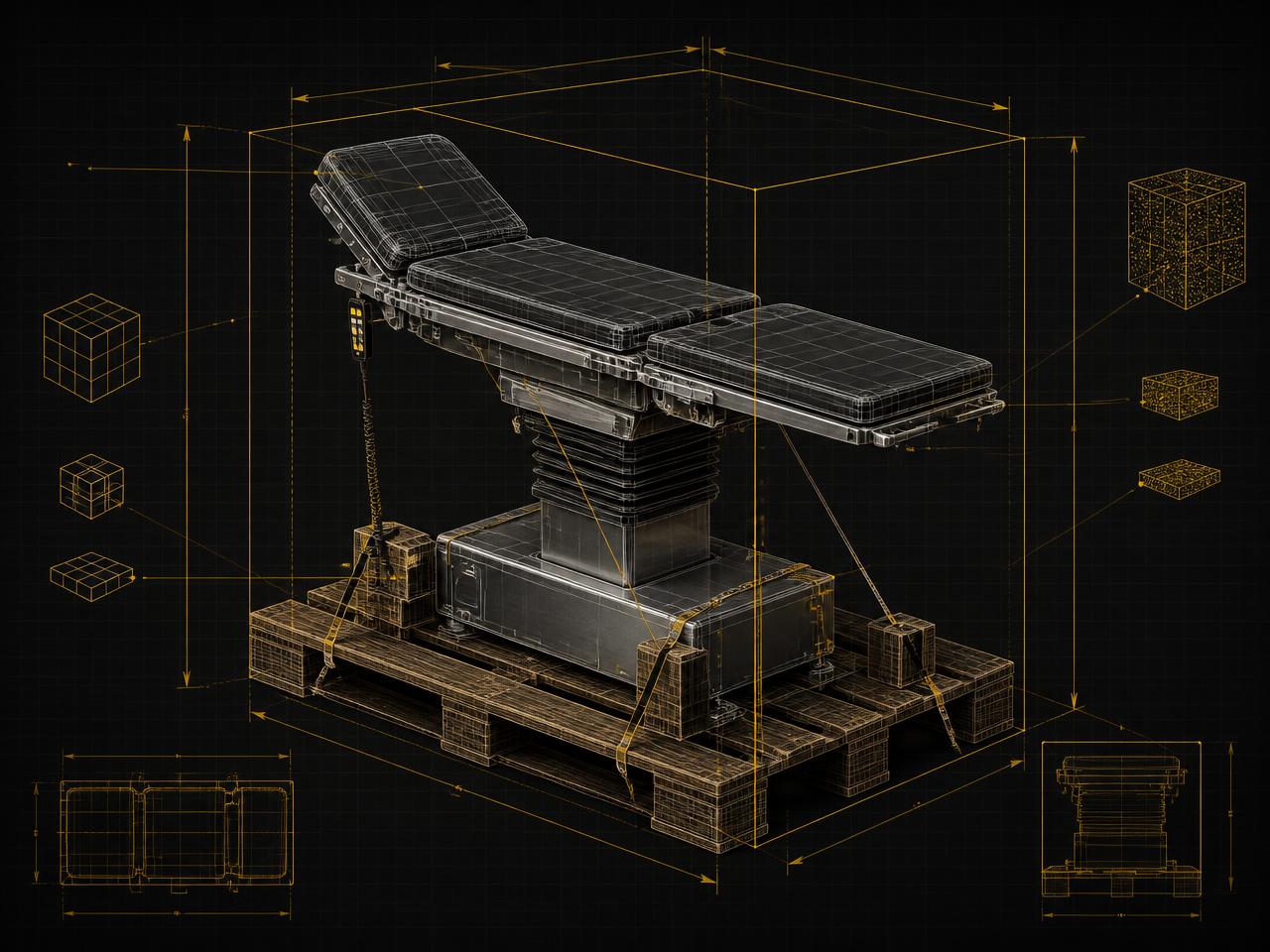
- Length96 IN
- Width48 IN
- Height52 IN
- Unit weight620 LB
- PackagingCRATED
- StackableNO
- FragileYES
- HazMatNO
- Photo evidence2 FILES
0 LB
0.0 FT³
0.00
CLASS 150
Validated · evidence complete
- Category Match
- Shipment Characteristics
- Handling-Unit Profile
- Cube
- Density
- Applicable Class
What the product is × how the freight actually moves
A completed profile can be saved and reused across future shipments — and it remains subject to revalidation whenever material shipment characteristics change. The library keeps the evidence attached to the decision, not just the class number.
Measure the freight.
Validate the profile.
Assign the class with evidence.
Lock the commodity. Validate the shipment profile.
- User Entries
- Shipment Statistics
- NMFC Rules
- Class Assignment
- Validation
Change the freight. The decision must respond.
One shipment profile shifts by eight inches. Cube recalculates, density moves, the applicable provisions are reevaluated, and the class is either confirmed or changed — with the reason recorded.
- Dimensions change
- Cube recalculates
- Density changes
- Rules reevaluated
- Class confirmed or changed
Changed evidence triggered a new class assignment. The prior decision remains on record with its own evidence trail.
Validation does not mean the profile can never change.
It means the classification is supported by the current evidence — and the system knows when changing evidence requires a new decision.
Validate the commodity.
Verify the profile.
Classify with evidence.
Hundreds of products. One governed review process.
Organizations upload existing product or SKU data and move from one-shipment classification into scalable classification governance. AI prepares and normalizes the data; the review process controls what becomes a validated decision.
- CSV / Product Data
- Normalize
- Classification Search
- Match Review
- Validation
- Governed Library
Article, packaging, and density evidence align with a supported provision.
A candidate provision fits, but a reviewer confirms the article family.
Dimensions, packaging, or construction detail is missing from the record.
Reopened for research instead of being forced into an unrelated classification.
| SKU | Description | Dimensions | Weight | Density | Handling | Current NMFC | Class | Dest ZIPs | Status | Photo |
|---|---|---|---|---|---|---|---|---|---|---|
| GRG-114882 | TABLE, SURGERY | 96×48×52 | 1,240 | 8.94 | NON-STK | ITEM · SUB 3 | 150 | 60007 / 30301 | CLEAN MATCH | ◧ 2 |
| GRG-114903 | CABINET, INSTRUMENT | 48×30×72 | 410 | 10.94 | STACKABLE | ITEM · SUB 2 | 125 | 85034 | POSSIBLE MATCH | ◧ 2 |
| GRG-115120 | LIGHT, EXAM, MOBILE | — | 96 | — | FRAGILE | PENDING | — | 19102 | MORE INFO REQUIRED | NONE |
| GRG-115204 | ASSEMBLY, CUSTOM RIG | 120×60×64 | 2,050 | 7.39 | NON-STK | UNRESOLVED | — | 98108 | NO MATCH | ◧ 2 |
AI prepares the data.
Governance controls the decision.
No guessing.
No silent assumptions.
From classification to exposure.
- 01
Incomplete descriptions
- 02
Reclassification exposure
- 03
Density near a class boundary
- 04
Dimension inconsistencies
- 05
Non-stackable freight
- 06
Fragile freight
- 07
Missing packaging information
- 08
Carrier-rule conflicts
Upload the library.
Resolve the exceptions.
Validate the data.
Manage the risk before it ships.
Your product library is validated. Now validate the pricing built around it.
Same freight facts.
Every pricing source below is evaluated against this single locked profile — not against four different versions of the same shipment.
- Current CSP
- Carrier Option
- 3PL Option
- Market Evidence
- Rule and Service Fit
- Comparable Result
A rate comparison is only valid
when the freight profile is the same.
Current pricing is supported by the available evidence.
Another supported option may provide better cost, service, or operational fit.
Classification, dimensional, accessorial, or carrier-rule risk exists.
More evidence is required before reaching a conclusion.
The lowest number is not automatically the best decision.
The objective is to determine which price represents an executable freight decision — supported by the classification, the rules, the service requirement, and the operating reality of the shipment.
- Current pricing is validated
- A different carrier offers better rule flexibility
- A 3PL provides stronger market access
- The shipment should be reconfigured
- Large LTL should be evaluated as Volume LTL or Partial Truckload
- A higher supported rate avoids a larger rebill or service failure
- Additional evidence is required

See what GRG sees.
Better freight decisions start with seeing the entire shipment — the article, the handling unit, the measurements, the rules that apply, and the pricing evidence built around them.
Freight IQ
Intelligence from data.
Wizard
Classification supported by evidence.
Strategy
More options. Better decisions.
Execution
Turn the decision into transportation action.
- Data
- Classification
- Strategy
- Execution
This is a conceptual explanation of the GRG decision framework. The Wizard supports discovery, measurement, and traceable classification decisions — it does not replace carrier rules, tariffs, or professional review.
The class number is not the end of the story.
- Better product data
- More consistent classification
- Better rate comparisons
- Fewer surprises
- Stronger transportation decisions
Defensible classification
Fewer rebills & disputes
More accurate quotes & ratings
Better margin protection
Stronger customer confidence
GRG helps reduce classification variance, identifies exposure before the freight moves, and supports decisions with traceable evidence.
How it works
The GRG NMFC Wizard turns freight classification from a guess into a governed, evidence-based decision path — so the class number you quote is one you can defend.
- Capture the commodity and shipment profile
- Resolve the best-fit NMFC and density rule
- Validate the class against carrier restrictions
- Test pricing and exposure before you quote

Know what you are shipping.
Know how it should be classified.
Then know whether your pricing holds up.
- Commodity
- NMFC
- Profile
- Density
- Class
- Validation
- Pricing
- Decision
Validate the profile.
Compare the evidence.
Negotiate from a position of knowledge.